|
ELECTRICIAN
ORANGE COUNTY CA, ELECTRICIAN IN ORANGE COUNTY CA, ORANGE COUNTY
ELECTRICIAN, BEST ELECTRICIANS ORANGE COUNTY CA, Electricians
orange county california, Residental Electrician Orange County,
Yelp Electrician Orange County, Commercial Electrician Orange
County, Electrical Contractor Orange County CA, Industrial Electricial
Orange County, FREE ESTIMATES, Commercial Electric Wiring, electric
lighting repair, industrial electric Costa mesa, electric service
orange county, lighting wiring, Mission Viejo, Huntington Beach,
San Clemente
|
|
Residential
Commerical
Industrial
|
ELECTRICIAN ORANGE COUNTY CA -
BEST ELECTRICIAN ORANGE COUNTY CA
JS ELECTRICAL CONTRACTOR ORANGE COUNTY CA
|
|
| |
(714)
469-2110
CALL
US TODAY!
|
|
|
|
| |
|
Electrician Orange County CA
- JS ELECTRIC -
Call Today
(714) 469-2110
VOTED BEST ELECTRICIANS IN ORANGE
COUNTY CA - Electricity Done Right!
Aliso Viejo, Irvine, Lake Forest, Rancho Santa Margarita, Laguna
Beach, Laguna Hills, Laguna Niguel, Trabucco Hills, Foothill
Ranch, Laguna Woods, San Juan Capistrano, Anahiem, Huntington
Beach, Newport Beach, San Clemente, Yorba Linda, Tustin, Buena
Park, Fountain Valley, Fullerton, Mission Viejo
"Invention is the most important product of man's creative
brain. The ultimate purpose is the complete mastery of mind
over the material world,
the harnessing of human nature to human needs." - Nikola
Tesla
|
Electrical
Wiring, Bus Bars, Breaker
Panel, Junction
Box, Grounding, Light
Fixtures, Solar
Power, LED
Lighting, Motors, Electrical Equipment, Electricity
Meter, Transformer, Material Handling Equipment, Switches,
Cabling, HVAC, Restaurants, Residential, Commercial Building,
Shopping Mall, Warehouses, Office Buildings, Retail Stores,
Factory, Brewery, Distillery, University, Refinery, Foundry,
Manufacturing Buildings, Apartment Buildings, Bakeries,
Data Centers, Hospitals, Homes, Chandeliers, Home Automation,
Refrigeration, Movie Theater, Standby Generators, Emergency
Power System, Electric Motors, Pools, Jacuzzi,
Hotels, Senior Centers, HOA
- Home
Owner Associations, Medical Offices
|
| |
| . |
Electricians
Orange County
.com
JS
Electric
We
are licensed 652382,
bonded, and insured
We accept Visa/Mastercard.
(714)
469-2110
CALL
US TODAY!
"Good
Power
Leads To Great Things!"
Greater
Living

(714)
469-2110
CALL
US TODAY!
VOTED
BEST
Electrician
In Orange County
JS
Electric
We
are licensed 652382,
bonded, and insured
We accept Visa/Mastercard
(714)
469-2110
CALL
US TODAY!
JS ELECTRIC
MISSION VIEJO
24112 Valyermo Drive
Mission Viejo, CA 92691
JS
ELECTRIC
SAN CLEMENTE
111 W. Avenida Palizada
San Clemente, CA 92672
JS
ELECTRIC
HUNTINGTON BEACH
19171 Magnolia Ave.
Huntington Beach, CA 92646
(714)
469-2110
CALL
US TODAY!
READ
OUR REVIEWS
Read About us On:
GOOGLE
YAHOO
INCREDELICIOUS
FACEBOOK
YOUTUBE
YELP
RECIPIE FOR LIFE
JS
ELECTRIC
LINKS PAGE - RECOMENDED
CALL
US TODAY
(714) 469-2110
Friends
In Business List
PLUMBER
ELECTRICIAN
REALTOR
WINDOW
CLEANING
PEST
CONTROL
COMMERCIAL
LOANS
FAMILY
PHOTOGRAPHY
IN HOME
CARE
AUTO
REPAIR
OLD TOWN
SAN CLEMENTE
|
NOTE:
The
information and notices contained on this website
are intended as general research and information
and are expressly not intended, and should not
be regarded, as medical, financial or legal
advice. The articles are from free sources.
Our boutiques reserve the right to refuse service
to anyone. All of our lash artists have been
trained in eyelash extensions and conduct business
in a professional manner. A sales tax is included
in the amounts quoted/charged, some retail products
have not been taxed, you will pay this upon
purchase.
| |
|
MOST
PROFICIENT COMPANIES I HAVE SEEN!
JS Electric is one of the most responsive
and proficient electrician companies I
have seen. My experience with them has
is that they have demonstrated the knowledge
and experience to handle any electrical
issue for large, as well as smaller projects.
Plus, they are very responsive and provide
excellent customer service. I recommend
them highly.
|
|
|
|
|
. |
Welcome:
VOTED BEST ELECTRICIANS IN ORANGE
COUNTY
"No
Job Is Too Big or Too Small, Electricity Done Right!"
RESIDENTIAL
PICTURES - COMMERCIAL
PICTURES - INDUSTRIAL
PICTURES
WE ARE AN ELECTRICAL CONTRACTOR
THAT ANSWERS THE PHONE
OR WILL CALL YOU RIGHT BACK IN MINUTES!
"All
contractors should be like Jim - punctual,
efficient, honest, and knowledgeable. It was an absolute
pleasure working with him." AnthonyP
Your
Friendly Helpful Electrical
Contractor in Orange County!
If
you are building new location, looking to purchase a
whole new electrical system, need a few outlets rewired,
switches installed, electrical pannels installed, high
voltage equipment installed or your circuit breaker
needs to be replaced or you keep blowing breakers,
JS Electric of Orange County is here to help you.
AND WE DO EMERGENCIES!
MOST
PROFICIENT COMPANIES I HAVE SEEN!
" JS Electric is one of the most responsive and
proficient electrician companies I have seen. My experience
with them has is that they have demonstrated the knowledge
and experience to handle any electrical issue for large,
as well as smaller projects. Plus, they are very responsive
and provide excellent customer service. I recommend
them highly."
We
are your Industrial, Commerical and Residential Electrical
Contractor Serving
ALL of Orange County California
We
are Licensed and Bonded C-10 electrical contractor serving
Orange County area since 1979. Our skilled electricians
provide professional, diagnostic troubleshooting and
we do FREE ESTIMATES.
Remember
we give free estimates and can also do an analysis
to lower your electrical bills.
VERY
PROFESSIONAL "Jim
and his crew are very professional, thorough, and helpful.
I had all my old halogens and containers replaced by
newer cntainers and LED bulbs in kitchen and living
room (high ceiling). They did a great job. Later, I
had new recessed lights with LED bulbs / containers
installed in all bedrooms. Wonderful job, good rewiring
from attic, nice clean drywall patchup, and good cleanup.
Overall excellent service. Good people to work with."
Bindu
WE
PROVIDE SERVICES FOR:
RESIDENTIAL-
Troubleshooting, Ceiling Fans, Recessed Lights, Pools
& Spas, Malibu Lights, Circuit Breakers, Motion
Detectors, Home Theater Systems, HDTV installations,
Home Automation, Network Cabling, Kitchen Lighting,
Landscape Lighting, Breaker Panel Upgrades, Shorted
Wires, New Home Services, Track Homes, Custom Built
Homes, New Outlets and Switches, Old Aluminum Wire,
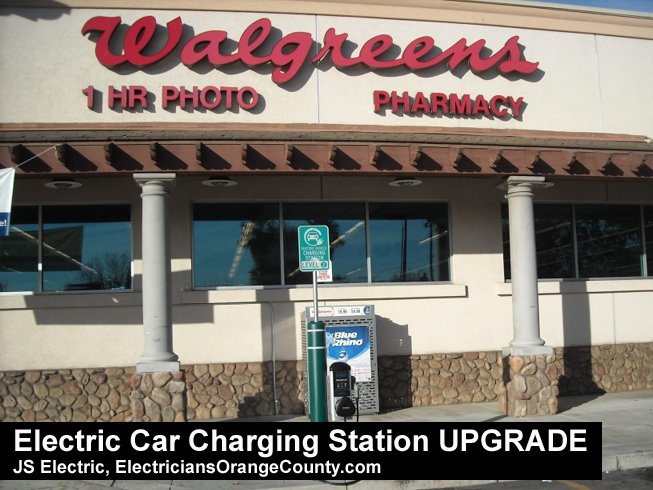
Electric Car Stations, Solar Panels, Home Generators,
HVAC Electrical, LED Lighting, Chandeliers, Entry Gates
and Controls, Recessed Lighting.
COMMERCIAL
- Troubleshooting, Dedicated Lines, Data Cables, Telephone
Lines, Load Centers, Office Lights, Remodeling, Electrical
Pannels, Dedicated Circuits, Grounding, Show Rooms,
Tenant Electrical Improvements, Landscape Lighting,
Fans, Motors, Copier Outlets, Troubleshooting & Repairs
Breaker & Fuse Repairs 277 Volt Commercial Lighting
Repairs & Installations Indoor / Outdoor Lamps & Ballast
Repairs Exit & Emergency Power Outage lighting Restaurant
Equipment Hook-ups Time Clocks & Photo Cells 220 & 240
Volt Dedicated circuits Copiers, Faxes and Computer
circuits New Panels & Transformers, Property Managers
& HOA service Code Violations & Repairs, Motor Control
Circuits, Equipment Rooms, Breakrooms, Restaurants,
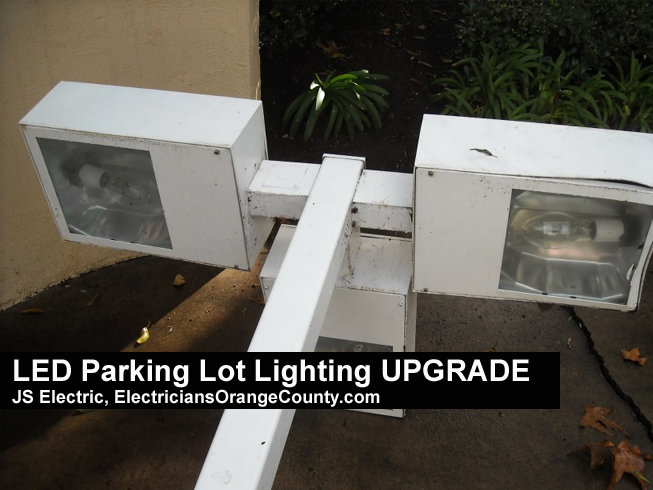
Kitchens, Skyscrapers, Parking Lights, LED Conversions,
Doctor Offices, Beauty Schools, Entry Gates and Controls,
Data Centers, Corporate Headquarters, Laboratories,
Recessed Lighting, Warehouses, Security Camera Cabling
and Power, Big Box Retailers, Washing Machines, Apartment
Complexes, Parking Garages, Shopping Centers, Monument
Signs, Ice Skating Rings, Parking Lots, Retail Stores,
Brewery, Universities, Bakeries, Banks and Security,
Movie Theaters, Gas Stations, Convience Stores, Standby
Generators, Emergency Power Systems, Solar Power, Senior
Living Centers, Hospitals, Machine Shops, Production
& Assembly Lines, Medical & Health Care Facilities,
Food Service Chains, Property Management, Food Preparation
Clients.
INDUSTRIAL
- Troubleshooting, Machine Hookups, Warehouse Lights,
Security, Lights, Transformers, 480V Wiring, Motor Control,
Electrical Pannels, Grounding, High Voltage Wiring,
Specialty Equipment Wiring, Auto Repair Shops, Manufacturing
Plants, Recycling Plants, Conveyor Belts, Robots, 3D
Printers, Stamping Machines, Injection Machines, Bending
Machines, Forming Machines, Sewing Machines, Electroplating,
Shreaders, Distillery, Factories, Distribution Hubs,
Gate Controls, Rooftop Equipment, Bakeries, Butchers,
Cleanrooms, Mixers, Emergency Power Backups, Solar Power
Generators, Electrical Switch Boxes, Emergency Stop
Buttons, Fans, Cooling, Refrigeration, Sorting Machines,
Recycling Equipment, Robot and Electric Vehicle Charging
Stations, Conveyor Systems, Refineries, Distilleries,
Foundries.
For a limited
time, many Utility & Power Companies are offering huge
rebates on new Energy Efficient LED lighting. In many
cases, with these rebates, our customers have seen paybacks
in 12 months!
For quality work and reasonable prices call us at:
CALL
US TODAY (714) 469-2110
RESIDENTIAL
ELECTRICIAN
ORANGE COUNTY CA
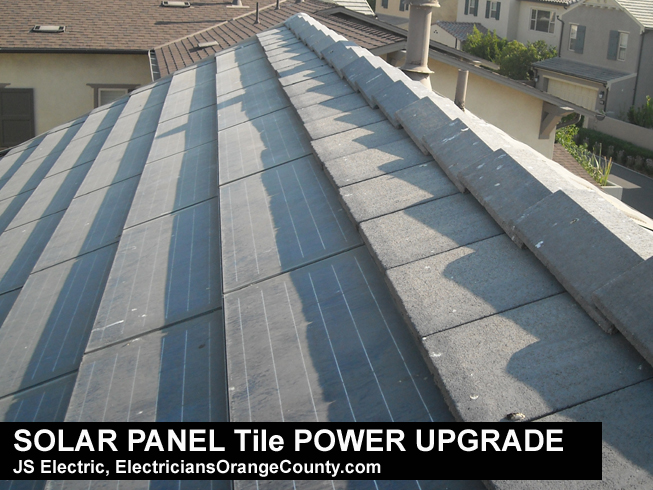
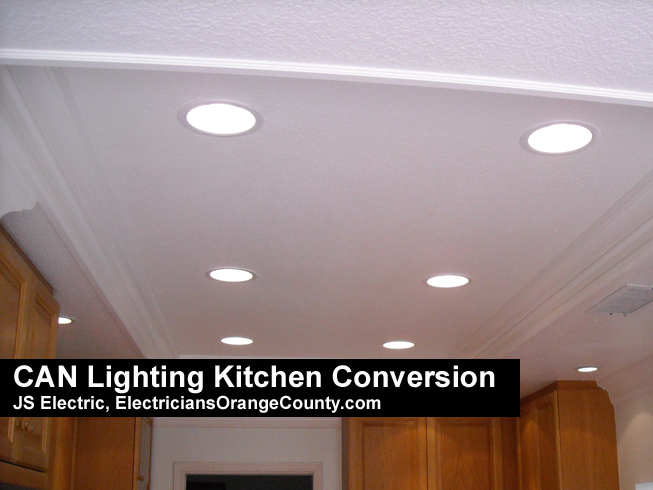
WE
SPECIALIZE IN HOME WIRING, SWITCHING AND LIGHTING
RESIDENTIAL
ELECTRICAL CONTRACTOR SERVICES
JS Electric is a full-service electrical
contracting business you can count on to be there when
you need us. We are centrally located in Mission Viejo,
San Clemente and Huntington Beach and provide service
throughout all of Orange County. From small jobs to
custom remodels we provide complete services for all
your residential, remodeling and restoration needs,
or any new projects! OUR SPECIALTIES INCLUDE:
- Home
Inspections
- Complete
Re-wires
- Recessed
Lighting Custom Lighting
- Panel
Upgrades / Panel Relocates
- Jacuzzi
/ Spa Hook-Ups
- 110
/ 220
- Ceiling,
Attic, Gable and Whole-House Fans
- Phone/Cable
Line Installations
- Surround
Sound / Speaker Lines
- Installation
of HDTV Systems and Home Theaters
- Complete
Kitchen and Bathroom remodels
- Under
cabinet lighting
- Indoor/Outdoor
Lighting
- Ceiling
fan installation
Low voltage lighting/landscape lighting
- Dedicated
outlets
- Troubleshooting
experts and much more
- Condo Services
- Pool
& spa wiring
- Network
Cabling
- Intercom
Systems
- CAT
6 and Higher, CAT 5e, CAT 3 wire installation
-
Landscape Lighting
- Chandelier
Installation
- Breaker
Replacement
- GFI
Socket installation
- Home
Automation
- Electric
heater outlet installation
- Electric
dryer outlet installation
- Home
Theater Installation
- HVAC
electrical
- LED
Lighting
- Motor
Control Circuits
- Garage
lighting
- Garage
outlets
-
Ballast / Lamp Replacing
CALL
US TODAY (714) 469-2110
COMMERCIAL
ELECTRICIAN
ORANGE COUNTY CA
COMMERICIAL
/ INDUSTRIAL ELECTRICAL CONTRACTOR SERVICES
JS
Electric provides high quality tenant improvement and
commercial services to many businesses in Southern California.
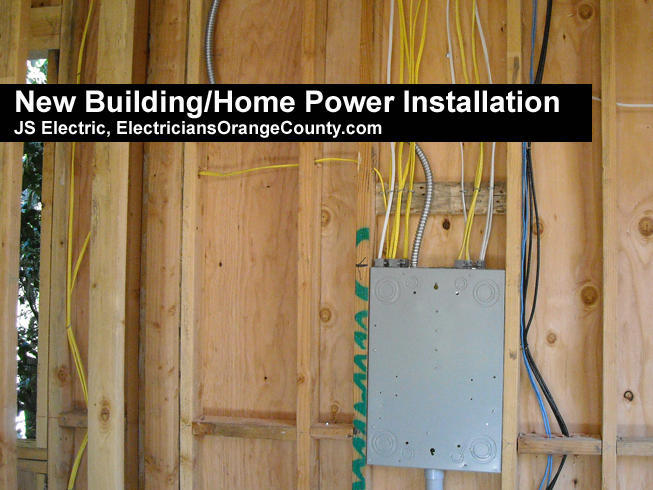
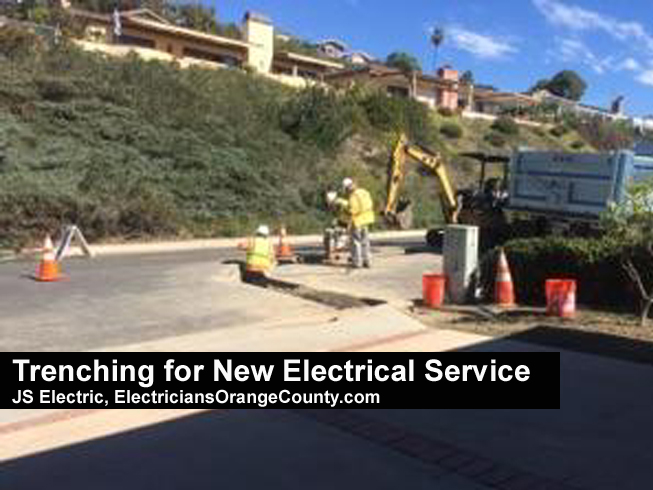
We do the big high voltage electrical jobs you find
in factories as well as the lower voltage you find in
office buildings. No job is too big or to small. Remember
we give FREE ESTIMATES and are a phone call away.
We specialize in:
- Lighting
Consultation/Maintenance
- Tenant
Improvements
- Troubleshooting
- Rewiring,
Repairs, Installation
- Panel
Repairs/Upgrades
- 3
Phase & Single Phase Wiring
- Repair
/ Replace / Install Circuit Breakers & Fuses
- Repair
/ Replace / Install Outlets, Switches and Lighting
- Dedicated
outlets
- High
Voltage & Low Voltage
- Transformer
Replacement/Repair
- Motor
Control Circuits
- 450
VAC
- Installation
of Equipment
- HVAC
Electrical on Roof Tops
-
Electrical Troubleshooting
- Robots
and 3D Printers Power
- Medical
Offices
- Restuarant
Equipment
- Recharging
Stations
- Gate
and Access Controls
- Office
Buildings, Hotels & Apartment Complexes
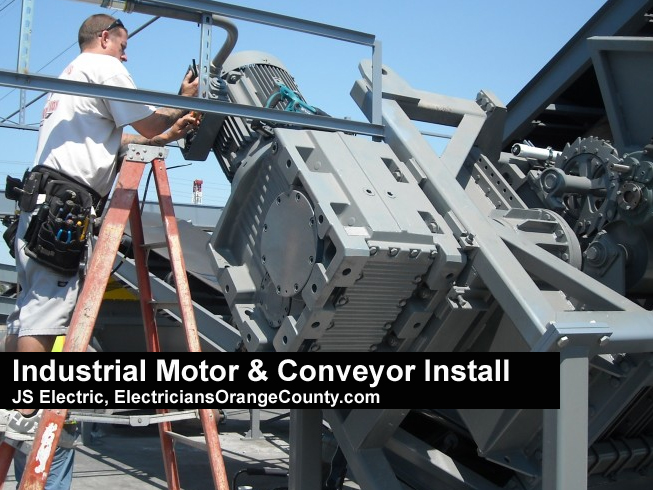
- Conveyor
Systems
- Pumping
Stations
- Recycling
Plants
- Laboratories
and Cleanrooms
-
Aluminum Wire to Copper wire Pigtailing
-
Ceiling Fan Installation
- HOA
Electrical Violations and Repairs
- Property
Management Companies
- Medical
and Health Care Facilities
- Shopping
Malls & Big Box Retailers
- Specialty
Machine Installation and Removal
-
Recessed Fixture Installation
- Warehouses
-
Landscape Lighting
-
Meter Panel Upgrades
-
Breaker Replacement
- Electric
Lifts and Cranes
-
Fuse Replacement
-
220 Volt Service Installation and Repair
-
Rewiring
-
Parking light installation and Maintenance
-
Sign Service and Repair
-
Low Voltage Touch Plate / Relay Systems
- CAT
6 and higher, CAT 5e, CAT 3 wire installation
-
Preventative
maintenance and inspections
-
HID Lighting and Control
-
T5 retrofit
-
Lighting Design
-
Transformers
-
Isolated Computer Circuits
-
Ballast / Lamp Replacing
-
1 Phase / 3 Phase Circuits
| OUR
COMMERCIAL & INDUSTRIAL ELECTRICAL SERVICES:
|
| |
|
|
ELECTICAL
SERVICES |
DETAILED
SPECIALTY WORK |
| |
 |
|
Generators
|
|
|
|
Dedicated
circuits )
|
| |
|
|
High-Voltage
Splicing |
|
|
|
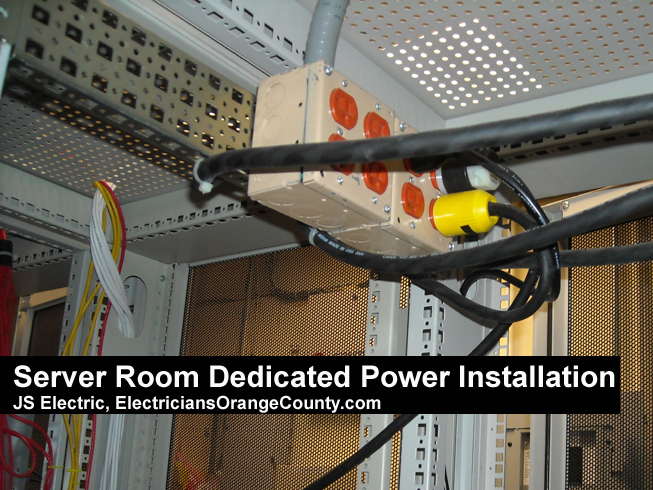
Computer
room power |
| |
|
|
Data-Com |
|
|
|
UPS
and generator installations |
| |
|
|
Service
Upgrades & Charging Stations |
|
|
|
Motor
and control circuitry |
| |
|
|
Dorm
Buildings |
|
|
|
Data
& communication cabling and network equipment
|
| |
|
|
Cleanrooms
and Conveyor Systems |
|
|
|
Telephone
system installation and service |
| |
|
|
Commercial
Buildings |
|
|
|
Lighting
design and custom installation |
| |
|
|
Electrical
Design and Build |
|
|
|
Lighting
efficiency retrofits |
| |
|
|
Fire
Alarms |
|
|
|
Monthly lighting maintenance contracts |
| |
|
|
Industrial
Work, 3D Printing, Robots |
|
|
|
Pool
& spa wiring |
| |
|
|
Waste
Water Treatment Plants |
|
|
|
Electrical inspections |
| |
|
|
Underground
Power Line Distribution |
|
|
|
Custom Industrial Machines |
| |
|
|
Pole
Line Construction |
|
|
|
Parking
Lot LIghting |
| |
|
|
Restaurant
Equipment & Power Upgrades |
|
|
|
LED
Retrofit LIghting |
| |
|
|
Motor
Control Systems |
|
|
|
Hotels,
Warehouses, Labratories and Factories |
| |
|
|
Industrial
Buildings and Lifts |
|
|
|
Office
Buildings, Schools, and Apartments |
| |
|
|
|
|
|
|
|
| |
|
|
| |
|
|
FAQ
- FREQUENTLY ASKED QUESTIONS:
Do
You Supply Free Quotes?
Yes, We provide free quotes. Ask us for a FREE ESTIMATE
on your electrical needs.
What
is Troubleshooting?
Trouble shooting is the "detective work" involved
in any electrical repair. We need every clue we can
get to troubleshoot quickly and accurately. You can
help us tremendously by giving us an accurate description
of what the problem was, and also how and when the problem
occurred. We test and examine your wiring of course,
but first we listen to you, to find out exactly what
you have experienced and why you have called us.
Can
you fix the problem the same day?
We will make every effort to do so. More often than
not we can fix the problem very quickly the same day.
Some problems require a city permit, an inspection,
or the power company to do work and we have to work
with these entity's schedules.
Are
you licensed, bonded and insured?
YES, we are licensed by the state of California, bonded
and insured for your protection and our own.
Will
my electrical project require a building permit?
Many household service and repair work will not require
a permit. Larger projects such as room additions and
service and panel upgrades will require a permit and
subsequent inspections. Each city has different variation.
Failure to hire a licensed professional could require
your work to be completely redone at additional expense.
Do you handle emergencies?
Yes, please give as a call we handle emergencies.
CALL
US TODAY (714) 469-2110
REVIEWS &
Testimonials:
What People are Saying
About Their Electricians Experience...
 "VERY
PROFESSIONAL!" "VERY
PROFESSIONAL!"
"Jim
and his crew are very professional, thorough, and
helpful. I had all my old halogens and containers
replaced by newer cntainers and LED bulbs in kitchen
and living room (high ceiling). They did a great job.
Later,
I had new recessed lights with LED bulbs / containers
installed in all bedrooms. Wonderful job, good rewiring
from attic, nice clean drywall patchup, and good cleanup.
Overall excellent service. Good people to work with."
-
Bindu
"PUNCTUAL,
EFFICIENT, HONEST, KNOWLEDGABLE!"
"All
contractors should be like Jim- punctual, efficient,
honest, and knowledgeable. It was an absolute pleasure
working with him." - AnthonyP
"VERY
RESPONSIVE AND PROFESSIONAL!"
"JS
ELectric has done several jobs for me and is always
very responsive and professional. Jim is usually in
touch with you within several hours and on the job
within 1 day. His work is very efficient and professional."
- Yahoo Local User
"ELECTRIFYING
TRUE PROFESSIONAL!"
"Mr.
Jim is Electrifying!? - It is such a pleasure to have
Jim attend to any of your Electricity needs. Not only
is he super punctual and appears when he says he'll
be there, ...? More » It is such a pleasure to have
Jim attend to any of your Electricity needs. Not only
is he super punctual and appears when he says he'll
be there, but he is a true professional! He knows
what he is doing, which, when you are talking about
elctricity, it kind of matters!! It is my pleasure
to recommend Jim as the most efficient and trustworthy
electrician I've come accross. Thank you Jim for being
such a pro!" - HealthGuru
"FAIRLY
PRICED!"
"Jim
is a very reliable and honest electrician. He responds
quickly to calls, can handle all of your electrical
needs, and is fairly priced. I would definitely recommend
JS Electric.!" - Marian, Lake Forest, CA
"CAN
FIX ANY ELECTRICAL PROBLEM!"
"A
real electrician!! Jim will fix whatever needs doing,
upgrade your panel or install any electrical need.
Jim is a patriotic American who knows the electrical
world like no one I have ever met. He likes his job
too!!!" - Richard B, San Clemente CA
"SHOCKINGLY
GOOD!"
"Shockingly
Good ! JS Electric Installed several underwater lights
and a pump at my home and completed the work at the
prices quoted in a timely manner. Jim Smith was a
pleasure to work with and I would not hesitate to
contract with JS Electric Again. Ken Filadelfia Delfia
Automation Systems (949) 589-7571" - Mission Viejo
CA
"TRUYLY
SOMEONE I CAN DEPEND ON!"
"Thanks
Jim for your great electrical work and fantastic pricing.
You are truly someone I can depend on to get to the
job quickly and fix the problem others can't. I have
be very impressed every time I have used your services!"
- Pat, Lake Forest CA
"MOST
PROFICIENT COMPANIES I HAVE SEEN!"
"JS
Electric is one of the most responsive and proficient
electrician companies I have seen. My experience with
them has is that they have demonstrated the knowledge
and experience to handle any electrical issue for
large, as well as smaller projects. Plus, they are
very responsive and provide excellent customer service.
I recommend them highly." - Yahoo Local User
"LISTENED
TO WHAT I WANTED!"
"Jim
Smith of JS Electric did all the wiring for my new
home office. Not only is Jim an expert electrician,
he took the time to listen to what I wanted and then
provided me with valuable suggestions and ideas -
each of which proved to be right. Jim and his crew
were prompt, reasonable and professional." - Tracy
Murphy Attorney At Law Irvine CA
"SHOULD
HAVE CALLED A LONG TIME AGO!"
"I
don’t know what it is with houses these days. When
I was a kid the bedrooms all had lights in the middle
of the ceiling. After years of going without, I call
Jim Smith at JS Electric to install a light fixture
for us and connect it to the switch on the wall. Should
have done it long ago!" - Thanks Jim. Richard Foushee
DDS, Aliso Viejo, CA
"PERFECT
ELECTRICAL WORK!"
"Perfect
Electrical Work. Very fair quotes. Hardworking. This
guy gets the job done with no headaches." - Adam,
Newport Beach CA
"CONSISTENTLY
EXCEEDED THEIR EXPECTATIONS!"
"Jim
Smith is a professional, reliable and quality electrician.
Though I have quite thankfully not had to use him
yet, many of my business associates have. He has consistently
exceeded their expectations and delivered quality
results. I highly recommend Jim to all of my business
associates and to you." - Virginia, Irvine CA
"KEEPS
MY CLIENTS HAPPY!"
"I
have been referring work to J.S. Electric for several
years. The owner Jim Smith has done a great job with
any job I have sent him and as a general contractor,
keeping my clients happy is very important to me.
Thanks again Jim" - J.C. Rancho Santa Margarita

"Click
Here" to Read More Testimonials
CALL
US TODAY (714)
469-2110
|
|
The
Electrician

TVA
electricians, Tennessee, 1942
|
| Occupation |
|
Occupation
type
|
Vocation |
|
Activity
sectors
|
Construction,
Maintenance, Electrical Grid |
| Description |
|
Related
jobs
|
Lineman |
An
electrician is a tradesperson
specializing in electrical
wiring of buildings, stationary machines.
and related equipment. Electricians may be employed
in the installation of new electrical components
or the maintenance and repair of existing electrical
infrastructure. Electricians may also specialize
in wiring ships, airplanes, and other mobile
platforms, as well as data and cable.
Terminology
Electricians
were originally people who demonstrated or studied
the principles of electricity,
often electrostatic
generators of one form or another.
In
the United States, electricians are divided
into two primary categories: linemen, who work
on electric utility company distribution
systems at higher voltages, and wiremen, who
work with the lower voltages utilized inside
buildings. Wiremen are generally trained in
one of five primary specialties: commercial,
residential, light industrial, industrial, and
low-voltage wiring, more commonly known as Voice-Data-Video,
or VDV. Other sub-specialties such as control
wiring and fire-alarm may be performed by specialists
trained in the devices being installed, or by
inside wiremen.
Electricians
are trained to one of three levels: Apprentice,
Journeyman, and Master Electrician. Apprentices
in the US and Canada are working to learn the
electrical trade. They generally take several
hundred hours of classroom instruction and are
contracted to follow apprenticeship standards
for a period of between three and six years,
during which time they are paid as a percentage
of the Journeyman's pay. Journeymen are electricians
who have completed their Apprenticeship and
who have been found by the local, State, or
National licensing body to be competent in the
electrical trade. Master Electricians have performed
well in the trade for a period of time, often
seven to ten years, and have passed an exam
to demonstrate superior knowledge of the National
Electrical Code, or NEC.
Service
electricians are tasked to respond to requests
for isolated repairs and upgrades. They have
considerable skills troubleshooting wiring problems,
installing wiring in existing buildings, and
making repairs. Construction electricians primarily
focus on larger projects, such as installing
all new electrical system for an entire building,
or upgrading an entire floor of an office building
as part of a remodeling process. Other specialty
areas are marine electricians, research electricians
and hospital electricians. "Electrician" is
also used as the name of a role in stagecraft,
where electricians are tasked primarily with
hanging, focusing, and operating stage
lighting. In this context, the Master
Electrician is the show's chief electrician.
Although theater
electricians routinely perform electrical
work on stage lighting instruments and equipment,
they are not part of the electrical trade and
have a different set of skills and qualifications
from the electricians that work on building
wiring.
In
the film industry
and on a television
crew the head electrician is referred to
as a Gaffer.
Electrical
contractors are businesses that employ electricians
to design, install, and maintain electrical
systems. Contractors are responsible for generating
bids for new jobs, hiring tradespeople for the
job, providing material to electricians in a
timely manner, and communicating with architects,
electrical and building engineers, and the customer
to plan and complete the finished product.
Training
and regulation of trade
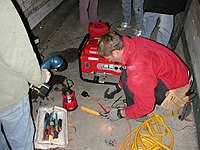
An
electrician hooking up a generator to a
home's electrical panel.
Many
jurisdictions have regulatory restrictions concerning
electrical work for safety reasons due to the
many hazards
of working with electricity. Such requirements
may be testing, registration or licensing. Licensing
requirements vary between jurisdictions.
United
States

An
electrician upgrades service on a multi-family
house from two meters to four.
The
United States does not offer nationwide licensing
and electrical licenses are issued by individual
states. There are variations in licensing requirements,
however, all states recognize three basic skill
categories: level electricians. Journeyman electricians
can work unsupervised provided that they work
according to a master's direction. Generally,
states do not offer journeyman permits, and
journeyman electricians and other apprentices
can only work under permits issued to a master.
Apprentices may not work without direct supervision.
Before
electricians can work unsupervised, they are
usually required to serve an apprenticeship
lasting from 3 to 5 years under the general
supervision of a Master
Electrician and usually the direct supervision
of a Journeyman Electrician.
Schooling in electrical theory and electrical
building codes is required to complete the apprenticeship
program. Many apprenticeship
programs provide a salary to the apprentice
during training. A Journeyman electrician is
a classification of licensing granted to those
who have met the experience requirements for
on the job training (usually 4080 to 6120 hours)
and classroom hours (about 144 hours). Requirements
include a two-year relevant degree, completion
of two to six years of apprenticeship training,
and passing a licensing exam.[citation
needed]}.
Reciprocity
An
electrician's license is valid for work in the
state where the license was issued. In addition,
many states recognize licenses from other states,
sometimes called interstate reciprocity participation,
although there can be conditions imposed. For
example, California reciprocates with Arizona,
Nevada, and Utah on the condition that licenses
are in good standing and have been held at the
other state for five years. Nevada reciprocates
with Arizona, California, and Utah. Maine reciprocates
with New Hampshire and Vermont at the master
level, and the state reciprocates with New Hampshire,
North Dakota, Idaho, Oregon, Vermont, and Wyoming
at the journeyman level.
Tools
Electricians
use a range of hand and power tools and instruments.
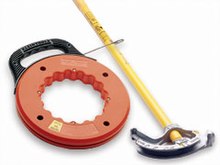
Two
of the tools commonly used by electricians.
The fish tape is used to pull conductors
through conduits, or sometimes to pull conductors
through hollow walls. The conduit bender
is used to make accurate bends and offsets
in electrical conduit.
Some
of the more common tools are:
- Conduit
Bender: Bender used to bend various types
of Electrical
Conduit. These come in many variations
including hand, electrical, and hydraulic
powered.
- Non-Contact
Voltage Testers
- Lineman's
Pliers: Heavy-duty pliers for general
use in cutting, bending, crimping and pulling
wire.
- Diagonal
Pliers (also known as side cutters or
Dikes): Pliers consisting of cutting blades
for use on smaller gauge wires, but sometimes
also used as a gripping tool for removal of
nails and staples.
- Needle-Nose
Pliers: Pliers with a long, tapered gripping
nose of various size, with or without cutters,
generally smaller and for finer work (including
very small tools used in electronics
wiring).
- Wire
Strippers: Plier-like tool available in
many sizes and designs featuring special blades
to cut and strip wire insulation while leaving
the conductor wire intact and without nicks.
Some wire strippers include cable
strippers among their multiple functions,
for removing the outer cable jacket.
- Cable
Cutters: Highly leveraged pliers for cutting
larger cable.
- Armored
Cable Cutters: Commonly referred to by the
trademark 'Roto-Split®' , is a tool used to
cut the metal sleeve on MC (Metal Clad) cable.
- Multimeter:
An instrument for electrical measurement with
multiple functions. It is available as analog
or digital display. Common features include:
voltage, resistance,
and current.
Some models offer additional functions.
- Unibit
or Step-Bit: A metal-cutting drill bit
with stepped-diameter cutting edges to enable
convenient drilling holes in preset increments
in stamped/rolled metal up to about 1.6mm
(1/16 inch) thick. Commonly used to create
custom knock-outs
in a breaker
panel or junction
box.
- Cord,
Rope or Fish Tape.
Used to manipulate cables and wires through
cavities. The fishing tool is pushed, dropped,
or shot into the installed raceway, stud-bay
or joist-bay
of a finished
wall or in a floor or ceiling. Then the
wire or cable is attached and pulled back.
- Crimping
Tools: Used to apply terminals or splices.
These may be hand or hydraulic powered. Some
hand tools have ratchets
to insure proper pressure. Hydraulic units
achieve cold welding,
even for aluminum cable.
- Insulation
Resistance Tester: Commonly referred to
as a Megger,
these testers apply several hundred to several
thousand volts to cables and equipment to
determine the insulation resistance value.
- Knockout
Punch: For punching holes into boxes,
panels, switchgear, etc. for inserting cable
& pipe connectors.
- GFI/GFCI
Testers: Used to test the functionality of
Ground-Fault Interrupting receptacles.
- Voltmeter:
An electrician's tool used to measure electrical
potential difference between two points in
an electric circuit.
- Other
general-use tools include screwdrivers,
hammers, reciprocating
saws, drywall
saws, flashlights,
chisels, tongue
and groove pliers (Commonly referred to
as 'Channellock®'
pliers, a famous manufacturer of this tool)
and drills.
Safety
In
addition to the workplace hazards generally
faced by industrial workers, electricians are
also particularly exposed to injury by electricity.
An electrician may experience electric
shock due to direct contact with energized
circuit conductors or due to stray
voltage caused by faults in a system. An
electric arc exposes
eyes and skin to hazardous amounts of heat and
light. Faulty switchgear may cause an arc
flash incident with a resultant blast. Electricians
are trained to work safely and take many measures
to minimize the danger of injury. Lockout and
tagout procedures are used to make sure that
circuits are proven to be de-energized before
work is done. Limits of approach to energized
equipment protect against arc
flash exposure; specially designed flash-resistant
clothing provides additional protection; grounding
(earthing) clamps and chains are used on line
conductors to provide a visible assurance that
a conductor is de-energized. Personal
protective equipment provides electrical
insulation as well as protection from mechanical
impact; gloves have insulating rubber liners,
and work boots and hard hats are specially rated
to provide protection from shock. If a system
cannot be de-energized, insulated tools are
used; even high-voltage transmission lines can
be repaired while energized, when necessary.
Electrical
workers, which includes electricians, accounted
for 34% of total electrocutions of construction
trades workers in the United States between
1992–2003.
Working
conditions
Working
conditions for electricians vary by specialization.
Generally an electrician's work is physically
demanding such as climbing ladders and lifting
tools and supplies. Occasionally an electrician
must work in a cramped space or on scaffolding,
and may frequently be bending, squatting or
kneeling, to make connections in awkward locations.
Construction electricians may spend much of
their days in outdoor or semi-outdoor loud and
dirty work sites. Industrial electricians may
be exposed to the heat, dust, and noise of an
industrial plant. Power systems electricians
may be called to work in all kinds of adverse
weather to make emergency repairs.
Trade
organizations
Some
electricians are union members and work under
their union's policies.
North
America
Some
electricians are union members. Some examples
of electricians' unions are: International
Brotherhood of Electrical Workers; Canadian
Union of Public Employees, International
Union of Electronic, Electrical, Salaried, Machine,
and Furniture Workers ; and the International
Association of Machinists and Aerospace Workers.
The International Brotherhood of Electrical
Workers provides its own apprenticeships through
its National
Joint Apprenticeship and Training Committee
and the National
Electrical Contractors Association. Many
merit shop training and apprenticeship programs
also exist, including those offered by such
as trade associations as Associated
Builders and Contractors and Independent
Electrical Contractors. These organizations
provide comprehensive training, in accordance
with U.S. Department of Labor regulations.
See
also
References
External
links
WHAT IS ELECTRICITY?
Electricity
(from New Latin e-lectricus, "amber-like") is
a general term that encompasses a variety of
phenomena resulting from the presence and flow
of electric charge. These include many easily
recognizable phenomena such as lightning and
static electricity, but in addition, less familiar
concepts such as the electromagnetic field and
electromagnetic induction.
In
general usage, the word 'electricity' is adequate
to refer to a number of physical effects. However,
in scientific usage, the term is vague, and
these related, but distinct, concepts are better
identified by more precise terms:
*
Electric charge – a property of some subatomic
particles, which determines their electromagnetic
interactions. Electrically charged matter is
influenced by, and produces, electromagnetic
fields.
*
Electric current – a movement or flow of
electrically charged particles, typically measured
in amperes.
*
Electric field – an influence produced by
an electric charge on other charges in its vicinity.
*
Electric potential – the capacity of an
electric field to do work, typically measured
in volts.
*
Electromagnetism – a fundamental interaction
between the electric field and the presence
and motion of electric charge.
Electricity
has been studied since antiquity, though scientific
advances were not forthcoming until the seventeenth
and eighteenth centuries. It would not be until
the late nineteenth century, however, that engineers
were able to put electricity to industrial and
residential use. This period witnessed a rapid
expansion in the development of electrical technology.
Electricity's extraordinary versatility as a
source of energy means it can be put to an almost
limitless set of applications which include
transport, heating, lighting, communications,
and computation. The backbone of modern industrial
society is, and for the foreseeable future can
be expected to remain, the use of electrical
power.
History
of Electricity
Knowledge
of electric discharge from electric fishes was
first reported in 2750 BC by the ancient Egyptians,
who referred to it as the "thunderer of the
Nile". They were again reported millennia later
by ancient Greek, Roman and Arabic naturalists
and physicians. Several ancient writers, such
as Pliny the Elder and Scribonius Largus, attested
to the numbing effect of electric shocks delivered
by catfish and torpedo rays, and knew that such
shocks could travel along conducting objects.
Patients suffering from ailments such as gout
or headache were directed to touch electric
fish in the hope that the powerful jolt might
cure them. Similar observations were later reported
by Al-Jahiz in medieval Egypt. That certain
objects such as rods of amber could be rubbed
with cat's fur and attract light objects like
feathers was known to ancient cultures around
the Mediterranean. Thales of Miletos made a
series of observations on static electricity
around 600 BC, from which he believed that friction
rendered amber magnetic, in contrast to minerals
such as magnetite, which needed no rubbing.
Thales was incorrect in believing the attraction
was due to a magnetic effect, but later science
would prove a link between magnetism and electricity.
According to a controversial theory, the Parthians
in Mesopotamia (now Iraq) may have had knowledge
of electroplating, based on the 1936 discovery
of the Baghdad Battery, which resembles a galvanic
cell, though it is uncertain whether the artefact
was electrical in nature.
Electricity
would remain little more than an intellectual
curiosity for over two millennia until 1600,
when the English physician William Gilbert made
a careful study of electricity and magnetism,
distinguishing the lodestone effect from static
electricity produced by rubbing amber. He coined
the New Latin word electricus ("of amber" or
"like amber", from, the Greek word for "amber")
to refer to the property of attracting small
objects after being rubbed. This association
gave rise to the English words "electric" and
"electricity", which made their first appearance
in print in Thomas Browne's Pseudodoxia Epidemica
of 1646. Further work was conducted by Otto
von Guericke, Robert Boyle, Stephen Gray and
C. F. du Fay. In the 18th century, Benjamin
Franklin conducted extensive research in electricity,
selling his possessions to fund his work. In
June 1752 he is reputed to have attached a metal
key to the bottom of a dampened kite string
and flown the kite in a storm-threatened sky.
He observed a succession of sparks jumping from
the key to the back of his hand, showing that
lightning was indeed electrical in nature
In
1791 Luigi Galvani published his discovery of
bioelectricity, demonstrating that electricity
was the medium by which nerve cells passed signals
to the muscles. Alessandro Volta's battery,
or voltaic pile, of 1800, made from alternating
layers of zinc and copper, provided scientists
with a more reliable source of electrical energy
than the electrostatic machines previously used.
André-Marie Ampère discovered the relationship
between electricity and magnetism in 1820; Michael
Faraday invented the electric motor in 1821,
and Georg Ohm mathematically analysed the electrical
circuit in 1827. While it had been the early
19th century that had seen rapid progress in
electrical science, the late 19th century would
see the greatest progress in electrical engineering.
Through such people as Nikola Tesla, Thomas
Edison, George Westinghouse, Ernst Werner von
Siemens, Alexander Graham Bell and Lord Kelvin,
electricity was turned from a scientific curiosity
into an essential tool for modern life, becoming
a driving force for the Second Industrial Revolution.
Concepts
- Electric charge
Electric
charge is a property of certain subatomic particles,
which gives rise to and interacts with, the
electromagnetic force, one of the four fundamental
forces of nature. Charge originates in the atom,
in which its most familiar carriers are the
electron and proton. It is a conserved quantity,
that is, the net charge within an isolated system
will always remain constant regardless of any
changes taking place within that system. Within
the system, charge may be transferred between
bodies, either by direct contact, or by passing
along a conducting material, such as a wire.
The informal term static electricity refers
to the net presence (or 'imbalance') of charge
on a body, usually caused when dissimilar materials
are rubbed together, transferring charge from
one to the other.
The
presence of charge gives rise to the electromagnetic
force: charges exert a force on each other,
an effect that was known, though not understood,
in antiquity. A lightweight ball suspended from
a string can be charged by touching it with
a glass rod that has itself been charged by
rubbing with a cloth. If a similar ball is charged
by the same glass rod, it is found to repel
the first: the charge acts to force the two
balls apart. Two balls that are charged with
a rubbed amber rod also repel each other. However,
if one ball is charged by the glass rod, and
the other by an amber rod, the two balls are
found to attract each other. These phenomena
were investigated in the late eighteenth century
by Charles-Augustin de Coulomb, who deduced
that charge manifests itself in two opposing
forms, leading to the well-known axiom: like-charged
objects repel and opposite-charged objects attract.
The
force acts on the charged particles themselves,
hence charge has a tendency to spread itself
as evenly as possible over a conducting surface.
The magnitude of the electromagnetic force,
whether attractive or repulsive, is given by
Coulomb's law, which relates the force to the
product of the charges and has an inverse-square
relation to the distance between them. The electromagnetic
force is very strong, second only in strength
to the strong interaction,[20] but unlike that
force it operates over all distances. In comparison
with the much weaker gravitational force, the
electromagnetic force pushing two electrons
apart is 1042 times that of the gravitational
attraction pulling them together.
The
charge on electrons and protons is opposite
in sign, hence an amount of charge may be expressed
as being either negative or positive. By convention,
the charge carried by electrons is deemed negative,
and that by protons positive, a custom that
originated with the work of Benjamin Franklin.
The amount of charge is usually given the symbol
Q and expressed in coulombs; each electron carries
the same charge of approximately -1.6022×10⁻¹⁹
coulomb. The proton has a charge that is equal
and opposite, and thus +1.6022×10⁻¹⁹ coulomb.
Charge is possessed not just by matter, but
also by antimatter, each antiparticle bearing
an equal and opposite charge to its corresponding
particle.
Charge
can be measured by a number of means, an early
instrument being the gold-leaf electroscope,
which although still in use for classroom demonstrations,
has been superseded by the electronic electrometer
Electric
current
The
movement of electric charge is known as an electric
current, the intensity of which is usually measured
in amperes. Current can consist of any moving
charged particles; most commonly these are electrons,
but any charge in motion constitutes a current.
By historical convention, a positive current
is defined as having the same direction of flow
as any positive charge it contains, or to flow
from the most positive part of a circuit to
the most negative part. Current defined in this
manner is called conventional current. The motion
of negatively-charged electrons around an electric
circuit, one of the most familiar forms of current,
is thus deemed positive in the opposite direction
to that of the electrons. However, depending
on the conditions, an electric current can consist
of a flow of charged particles in either direction,
or even in both directions at once. The positive-to-negative
convention is widely used to simplify this situation.
If another definition is used—for example, "electron
current"—it needs to be explicitly stated.
The
process by which electric current passes through
a material is termed electrical conduction,
and its nature varies with that of the charged
particles and the material through which they
are travelling. Examples of electric currents
include metallic conduction, where electrons
flow through a conductor such as metal, and
electrolysis, where ions (charged atoms) flow
through liquids. While the particles themselves
can move quite slowly, sometimes with a average
drift velocity only fractions of a millimetre
per second, the electric field that drives them
itself propagates at close to the speed of light,
enabling electrical signals to pass rapidly
along wires. Current causes several observable
effects, which historically were the means of
recognising its presence. That water could be
decomposed by the current from a voltaic pile
was discovered by Nicholson and Carlisle in
1800, a process now known as electrolysis. Their
work was greatly expanded upon by Michael Faraday
in 1833. Current through a resistance causes
localised heating, an effect James Prescott
Joule studied mathematically in 1840. One of
the most important discoveries relating to current
was made accidentally by Hans Christian Ørsted
in 1820, when, while preparing a lecture, he
witnessed the current in a wire disturbing the
needle of a magnetic compass. He had discovered
electromagnetism, a fundamental interaction
between electricity and magnetics.
In
engineering or household applications, current
is often described as being either direct current
(DC) or alternating current (AC). These terms
refer to how the current varies in time. Direct
current, as produced by example from a battery
and required by most electronic devices, is
a unidirectional flow from the positive part
of a circuit to the negative. If, as is most
common, this flow is carried by electrons, they
will be travelling in the opposite direction.
Alternating current is any current that reverses
direction repeatedly; almost always this takes
the form of a sinusoidal wave. Alternating current
thus pulses back and forth within a conductor
without the charge moving any net distance over
time. The time-averaged value of an alternating
current is zero, but it delivers energy in first
one direction, and then the reverse. Alternating
current is affected by electrical properties
that are not observed under steady state direct
current, such as inductance and capacitance.
These properties however can become important
when circuitry is subjected to transients, such
as when first energised.
Electric
field
The
concept of the electric field was introduced
by Michael Faraday. An electric field is created
by a charged body in the space that surrounds
it, and results in a force exerted on any other
charges placed within the field. The electric
field acts between two charges in a similar
manner to the way that the gravitational field
acts between two masses, and like it, extends
towards infinity and shows an inverse square
relationship with distance. However, there is
an important difference. Gravity always acts
in attraction, drawing two masses together,
while the electric field can result in either
attraction or repulsion. Since large bodies
such as planets generally carry no net charge,
the electric field at a distance is usually
zero. Thus gravity is the dominant force at
distance in the universe, despite being much
the weaker.
An
electric field generally varies in space, and
its strength at any one point is defined as
the force (per unit charge) that would be felt
by a stationary, negligible charge if placed
at that point. The conceptual charge, termed
a 'test charge', must be vanishingly small to
prevent its own electric field disturbing the
main field and must also be stationary to prevent
the effect of magnetic fields. As the electric
field is defined in terms of force, and force
is a vector, so it follows that an electric
field is also a vector, having both magnitude
and direction. Specifically, it is a vector
field.
The
study of electric fields created by stationary
charges is called electrostatics. The field
may be visualised by a set of imaginary lines
whose direction at any point is the same as
that of the field. This concept was introduced
by Faraday, whose term 'lines of force' still
sometimes sees use. The field lines are the
paths that a point positive charge would seek
to make as it was forced to move within the
field; they are however an imaginary concept
with no physical existence, and the field permeates
all the intervening space between the lines
Field lines emanating from stationary charges
have several key properties: first, that they
originate at positive charges and terminate
at negative charges; second, that they must
enter any good conductor at right angles, and
third, that they may never cross nor close in
on themselves.
The
principals of electrostatics are important when
designing items of high-voltage equipment. There
is a finite limit to the electric field strength
that may withstood by any medium. Beyond this
point, electrical breakdown occurs and an electric
arc causes flashover between the charged parts.
Air, for example, tends to arc at electric field
strengths which exceed 30 kV per centimetre
across small gaps. Over larger gaps, its breakdown
strength is weaker, perhaps 1 kV per centimetre.
The most visible natural occurrence of this
is lightning, caused when charge becomes separated
in the clouds by rising columns of air, and
raises the electric field in the air to greater
than it can withstand. The voltage of a large
lightning cloud may be as high as 100 MV and
have discharge energies as great as 250 kWh.
The field strength is greatly affected by nearby
conducting objects, and it is particularly intense
when it is forced to curve around sharply pointed
objects. This principle is exploited in the
lightning conductor, the sharp spike of which
acts to encourage the lightning stroke to develop
there, rather than to the building it serves
to protect.
Electric
potential
The
concept of electric potential is closely linked
to that of the electric field. A small charge
placed within an electric field experiences
a force, and to have brought that charge to
that point against the force requires work.
The electric potential at any point is defined
as the energy required to bring a unit test
charge from an infinite distance slowly to that
point. It is usually measured in volts, and
one volt is the potential for which one joule
of work must be expended to bring a charge of
one coulomb from infinity. This definition of
potential, while formal, has little practical
application, and a more useful concept is that
of electric potential difference, and is the
energy required to move a unit charge between
two specified points. An electric field has
the special property that it is conservative,
which means that the path taken by the test
charge is irrelevant: all paths between two
specified points expend the same energy, and
thus a unique value for potential difference
may be stated. The volt is so strongly identified
as the unit of choice for measurement and description
of electric potential difference that the term
voltage sees greater everyday usage. For practical
purposes, it is useful to define a common reference
point to which potentials may be expressed and
compared. While this could be at infinity, a
much more useful reference is the Earth itself,
which is assumed to be at the same potential
everywhere. This reference point naturally takes
the name earth or ground. Earth is assumed to
be an infinite source of equal amounts of positive
and negative charge, and is therefore electrically
uncharged – and unchargeable.
Electric
potential is a scalar quantity, that is, it
has only magnitude and not direction. It may
be viewed as analogous to temperature: as there
is a certain temperature at every point in space,
and the temperature gradient indicates the direction
and magnitude of the driving force behind heat
flow, similarly, there is an electric potential
at every point in space, and its gradient, or
field strength, indicates the direction and
magnitude of the driving force behind charge
movement. Equally, electric potential may be
seen as analogous to height: just as a released
object will fall through a difference in heights
caused by a gravitational field, so a charge
will 'fall' across the voltage caused by an
electric field. The electric field was formally
defined as the force exerted per unit charge,
but the concept of potential allows for a more
useful and equivalent definition: the electric
field is the local gradient of the electric
potential. Usually expressed in volts per metre,
the vector direction of the field is the line
of greatest gradient of potential.
Electromagnetism
Ørsted's
discovery in 1821 that a magnetic field existed
around all sides of a wire carrying an electric
current indicated that there was a direct relationship
between electricity and magnetism. Moreover,
the interaction seemed different from gravitational
and electrostatic forces, the two forces of
nature then known. The force on the compass
needle did not direct it to or away from the
current-carrying wire, but acted at right angles
to it. Ørsted's slightly obscure words were
that "the electric conflict acts in a revolving
manner." The force also depended on the direction
of the current, for if the flow was reversed,
then the force did too. Ørsted did not fully
understand his discovery, but he observed the
effect was reciprocal: a current exerts a force
on a magnet, and a magnetic field exerts a force
on a current. The phenomenon was further investigated
by Ampère, who discovered that two parallel
current carrying wires exerted a force upon
each other: two wires conducting currents in
the same direction are attracted to each other,
while wires containing current flowing in opposite
directions are forced apart. The interaction
is mediated by the magnetic field each current
produces and forms the basis for the international
definition of the ampere.
This
relationship between magnetic fields and currents
is extremely important, for it led to Michael
Faraday's invention of the electric motor in
1821. Faraday's homopolar motor consisted of
a permanent magnet sitting in a pool of mercury.
A current was allowed to flow through a wire
suspended from a pivot above the magnet and
dipped into the mercury. The magnet exerted
a tangential force on the wire, making it circle
around the magnet for as long as the current
was maintained. Experimentation by Faraday in
1831 revealed that a wire moving perpendicular
to a magnetic field developed a potential difference
between its ends. Further analysis of this process,
known as electromagnetic induction, enabled
him to state the principal, now known as Faraday's
law of induction, that the potential difference
induced in a closed circuit is proportional
to the rate of change of magnetic flux through
the loop. Exploitation of this discovery enabled
him to invent the first electrical generator
in 1831, in which he converted the mechanical
energy of a rotating copper disc to electrical
energy. Faraday's disc was inefficient and of
no use as a practical generator, but it showed
the possibility of generating electric power
using magnetism, a possibility that would be
taken up by those that followed on from his
work.
Faraday's
and Ampère's work showed that a time-varying
magnetic field acted as a source of an electric
field, and a time-varying electric field was
a source of a magnetic field. Thus, when either
field is changing in time, then a field of the
other is necessarily induced. Such a phenomenon
has the properties of a wave, and is naturally
referred to as an electromagnetic wave. Electromagnetic
waves were analysed theoretically by James Clerk
Maxwell in 1864. Maxwell discovered a set of
equations that could unambiguously describe
the interrelationship between electric field,
magnetic field, electric charge, and electric
current. He could moreover prove that such a
wave would necessarily travel at the speed of
light, and thus light itself was a form of electromagnetic
radiation. Maxwell's Laws, which unify light,
fields, and charge are one of the great milestones
of theoretical physics.
Electric
circuits
An
electric circuit is an interconnection of electric
components, usually to perform some useful task,
with a return path to enable the charge to return
to its source. The components in an electric
circuit can take many forms, which can include
elements such as resistors, capacitors, switches,
transformers and electronics. Electronic circuits
contain active components, usually semiconductors,
and typically exhibit non-linear behavior, requiring
complex analysis. The simplest electric components
are those that are termed passive and linear:
while they may temporarily store energy, they
contain no sources of it, and exhibit linear
responses to stimuli. The resistor is perhaps
the simplest of passive circuit elements: as
its name suggests, it resists the flow of current
through it, dissipating its energy as heat.
Ohm's law is a basic law of circuit theory,
stating that the current passing through a resistance
is directly proportional to the potential difference
across it. The ohm, the unit of resistance,
was named in honour of Georg Ohm, and is symbolised
by the Greek letter ?. 1 ? is the resistance
that will produce a potential difference of
one volt in response to a current of one amp.
The
capacitor is a device capable of storing charge,
and thereby storing electrical energy in the
resulting field. Conceptually, it consists of
two conducting plates separated by a thin insulating
layer; in practice, thin metal foils are coiled
together, increasing the surface area per unit
volume and therefore the capacitance. The unit
of capacitance is the farad, named after Michael
Faraday, and given the symbol F: one farad is
the capacitance that develops a potential difference
of one volt when it stores a charge of one coulomb.
A capacitor connected to a voltage supply initially
causes a current to flow as it accumulates charge;
this current will however decay in time as the
capacitor fills, eventually falling to zero.
A capacitor will therefore not permit a steady
state current to flow, but instead blocks it.
The inductor is a conductor, usually a coil
of wire, that stores energy in a magnetic field
in response to the current flowing through it.
When the current changes, the magnetic field
does too, inducing a voltage between the ends
of the conductor. The induced voltage is proportional
to the time rate of change of the current. The
constant of proportionality is termed the inductance.
The unit of inductance is the henry, named after
Joseph Henry, a contemporary of Faraday. One
henry is the inductance that will induce a potential
difference of one volt if the current through
it changes at a rate of one ampere per second.
The inductor's behaviour is in some regards
converse to that of the capacitor: it will freely
allow an unchanging current to flow, but opposes
the flow of a rapidly changing one.
Production
and uses -
Generation
Thales'
experiments with amber rods were the first studies
into the production of electrical energy. While
this method, now known as the triboelectric
effect, is capable of lifting light objects
and even generating sparks, it is extremely
inefficient. It was not until the invention
of the voltaic pile in the eighteenth century
that a viable source of electricity became available.
The voltaic pile, and its modern descendant,
the electrical battery, store energy chemically
and make it available on demand in the form
of electrical energy. The battery is a versatile
and very common power source which is ideally
suited to many applications, but its energy
storage is finite, and once discharged it must
be disposed of or recharged. For large electrical
demands electrical energy must be generated
and transmitted in bulk. Electrical energy is
usually generated by electro-mechanical generators
driven by steam produced from fossil fuel combustion,
or the heat released from nuclear reactions;
or from other sources such as kinetic energy
extracted from wind or flowing water. Such generators
bear no resemblance to Faraday's homopolar disc
generator of 1831, but they still rely on his
electromagnetic principle that a conductor linking
a changing magnetic field induces a potential
difference across its ends. The invention in
the late nineteenth century of the transformer
meant that electricity could be generated at
centralised power stations, benefiting from
economies of scale, and be transmitted across
countries with increasing efficiency. Since
electrical energy cannot easily be stored in
quantities large enough to meet demands on a
national scale, at all times exactly as much
must be produced as is required. This requires
electricity utilities to make careful predictions
of their electrical loads, and maintain constant
co-ordination with their power stations. A certain
amount of generation must always be held in
reserve to cushion an electrical grid against
inevitable disturbances and losses. Demand for
electricity grows with great rapidity as a nation
modernises and its economy develops. The United
States showed a 12% increase in demand during
each year of the first three decades of the
twentieth century, a rate of growth that is
now being experienced by emerging economies
such as those of India or China. Historically,
the growth rate for electricity demand has outstripped
that for other forms of energy, such as coal.
Environmental concerns with electricity generation
have led to an increased focus on generation
from renewable sources, in particular from wind-
and hydropower. While debate can be expected
to continue over the environmental impact of
different means of electricity production, its
final form is relatively clean.
Uses
Electricity
is an extremely flexible form of energy, and
has been adapted to a huge, and growing, number
of uses. The invention of a practical incandescent
light bulb in the 1870s led to lighting becoming
one of the first publicly available applications
of electrical power. Although electrification
brought with it its own dangers, replacing the
naked flames of gas lighting greatly reduced
fire hazards within homes and factories. Public
utilities were set up in many cities targeting
the burgeoning market for electrical lighting.
The Joule heating effect employed in the light
bulb also sees more direct use in electric heating.
While this is versatile and controllable, it
can be seen as wasteful, since most electrical
generation has already required the production
of heat at a power station. A number of countries,
such as Denmark, have issued legislation restricting
or banning the use of electric heating in new
buildings. Electricity is however a highly practical
energy source for refrigeration, with air conditioning
representing a growing sector for electricity
demand, the effects of which electricity utilities
are increasingly obliged to accommodate. Electricity
is used within telecommunications, and indeed
the electrical telegraph, demonstrated commercially
in 1837 by Cooke and Wheatstone, was one of
its earliest applications. With the construction
of first intercontinental, and then transatlantic,
telegraph systems in the 1860s, electricity
had enabled communications in minutes across
the globe. Optical fibre and satellite communication
technology have taken a share of the market
for communications systems, but electricity
can be expected to remain an essential part
of the process. The effects of electromagnetism
are most visibly employed in the electric motor,
which provides a clean and efficient means of
motive power. A stationary motor such as a winch
is easily provided with a supply of power, but
a motor that moves with its application, such
as an electric vehicle, is obliged to either
carry along a power source such as a battery,
or by collecting current from a sliding contact
such as a pantograph, placing restrictions on
its range or performance. Electronic devices
make use of the transistor, perhaps one of the
most important inventions of the twentieth century,[63]
and a fundamental building block of all modern
circuitry. A modern integrated circuit may contain
several billion miniaturised transistors in
a region only a few centimetres square.
Electricity
retailing
Electricity
retailing is the final process in the delivery
of electricity from generation to the consumer.
The other main processes are transmission and
distribution.
Beginnings
Electricity retailing began at the end of the
19th century when the bodies who generated electricity
for their own use made supply available to third
parties. In the beginning, electricity was primarily
used for street lighting and trams. The general
public were allowed to purchase electricity
only after large scale electric companies were
started. The provision of these services was
generally the responsibility of electric companies
or municipal authorities who either set up their
own departments or contracted the services from
private entrepreneurs. Residential, commercial
and industrial use of electricity was confined,
initially, to lighting but this changed dramatically
with the development of electric motors, heaters
and communication devices. The basic principle
of supply has not changed much over time. The
amount of energy used by the domestic consumer,
and thus the amount charged for, is measured
through an electricity meter that is usually
placed near the input of a home to provide easy
access to the meter reader. Customers are usually
charged a monthly service fee and additional
charges based on the electrical energy (in kWh)
consumed by the household or business during
the month. Commercial and industrial consumers
normally have more complex pricing schemes.
These require meters that measure the energy
usage in time intervals (such as a half hour)
to impose charges based on both the amount of
energy consumed and the maximum rate of consumption,
i.e. the maximum demand, which is measured in
kVA.
Monopoly
supply
The rapid growth in electric appliance usage
in the early part of the 20th century contributed
to an explosive growth in electrification around
the world. The supply of electricity to homes,
offices, shops, factories, farms, and mines
became the responsibility of public utilities,
which were either private organizations subject
to monopoly regulation or public authorities
owned by local, state or national bodies. In
some countries a statutory or government-granted
monopoly was created, which was controlled by
legislation (for example Eskom in South Africa).
Home electrical meters Home electrical meters
Electricity retailing in the period from approximately
1890 to 1990 consisted of managing the connection,
disconnection and billing of electricity consumers
by the local monopoly supplier. In many utilities
there was a marketing function which encouraged
electricity usage when there was excess capacity
to supply and encouraged conservation when supply
was tight.
Creating
a market
In 1990 there was a significant development
in the way electricity was bought and sold.
In many countries, the electricity market was
deregulated to open up the supply of electricity
to competition. In the United Kingdom the Electricity
Supply Industry was radically reformed to establish
competition. This trend continued in other countries
(see New Zealand Electricity Market and deregulation)
and the role of electricity retailing changed
from what was essentially an administrative
function within an integrated utility to become
a risk management function within a competitive
electricity market. Electricity retailers now
provide fixed prices for electricity to their
customers and manage the risk involved in purchasing
electricity from spot markets or electricity
pools. This development has not been without
casualties. The most notable example of poor
risk management (coupled with poor market regulation)
was the 2001 California electricity crisis,
when Pacific Gas and Electric and Southern California
Edison were driven into bankruptcy by having
to purchase electricity at high spot prices
and sell at low fixed rates. Customers may choose
from a number of competing suppliers. They may
also opt to pay more for "green" power, i.e.
electricity sourced from renewable energy generation
such as wind power or solar power. An electricity
provider is often known as "the electric company"
or "the power company".
Rates
The rates charged for electricity vary between
countries, regions and states. The reason for
the variation is primarily regulation and the
way it is generated. For example, some states
in the US have large hydroelectric generation
facilities that are largely subsidized and relatively
efficient, and rates are as low as $0.06 per
kWh, as in Idaho. In other states, such as California,
which has to import electricity from neighboring
states, the rates can be as high as $0.38 per
kWh during peak hours for high-use residential
customers that pay based on time of use . As
of 2006 (May), the average rate for electricity
in the US was approximately $0.106 per kWh .
ELECTRICIAN
ORANGE COUNTY, ELECTRICIANS IN ORANGE COUNTY,
ELECTRICAL CONTRACTOR ORANGE COUNTY, COMMERCIAL
ELECTRICIANL, INDUSTRIAL ELECTRICIAN, RESIDENTIAL
ELECTRICIAN, Anaheim, 92801, 92802, 92803, 92804,
92805, 92806, 92807, 92808, 92809, 92812, 92814,
92815, 92816, 92817, 92825, 92850, 92899, Brea,
92821, 92822, 92823, Buena Park, 90620, 90621,
90622, 90623, 90624, Costa Mesa, 92626, 92627,
92628, Cypress, 90630, Fountain Valley, 92708,
92728, Fullerton, 92831, 92832, 92833, 92834,
92835, 92836, 92837, 92838, Garden Grove, 92840,
92841, 92842, 92843, 92844, 92845, 92846, Huntington
Beach 92605, 92615, 92646, 92647, 92648, 92649,
Irvine, 92602, 92603, 92604, 92606, 92612, 92614,
92616, 92618, 92619, 92620, 92623, 92650, 92697,
92709, 92710, La Habra, 90631, 90632, 90633,
La Palma, 90623, Los Alamitos, 90720, 90721,
Orange, 92856, 92857, 92859, 92861, 92862, 92863,
92864, 92865, 92866, 92867, 92868, 92869, Placentia
92870, 92871, Santa Ana, 92701, 92702, 92703,
92704, 92705, 92706, 92707, 92708, 92711, 92712,
92725, 92728, 92735, 92799, Seal Beach, 90740,
Stanton, 90680, Tusin, 92780, 92781, 92782,
Villa Park, 92861, 92867, Westminister, 92683,
92684, 92685, Yorba Linda, 92885, 92886, 92887,Aliso
Viejo, 92653, 92656, 92698, Dana Point, 92624,
92629,Laguna Beach, 92607, 92637, 92651, 92652,
92653, 92654, 92656, 92677, 92698, Laguna Hills,
92637, 92653, 92654, 92656, Laguna Niguel, 92607,
92677, Laguna Woods, 92653, 92654, Lake Forest,
92609, 92630, Mission Viejo, 92675, 92690, 92691,
92692, 92694, Newport Beach, 92657, 92658, 92659,
92660, 92661, 92662, 92663, Rancho Santa Margarita,
92688, San Clemente, 92672, 92673, 92674, San
Juan Capistrano, 92675, 92690, 92691, 92692,
92693, 92694, Ladera Ra,nch, 92694, Coto De
Caza 92679 Anaheim Hills, 92807, 92808, 92809,
92817, Dove Canyon, 92679, Coto De Caza, 92679,
Newport Coast, 92657, Corona Del Mar, 92625,
El Modena, Las Flores, Midway City, Orange Park
Acres, Rossmoor, Silverado Canyon, Sunset Beach,
Surfside, Trabuco Canyon, Talega, Tustin Foothills
, OC
| |
| ABOUT
ORANGE COUNTY CALIFORNIA |
Orange
County
is a county in Southern California, United States.
Its county seat is Santa Ana. According to the 2000
Census, its population was 2,846,289, making it
the second most populous county in the state of
California, and the fifth most populous in the United
States. The state of California estimates its population
as of 2007 to be 3,098,121 people, dropping its
rank to third, behind San Diego County. Thirty-four
incorporated cities are located in Orange County;
the newest is Aliso Viejo.
Unlike many other large centers of population in
the United States, Orange County uses its county
name as its source of identification whereas other
places in the country are identified by the large
city that is closest to them. This is because there
is no defined center to Orange County like there
is in other areas which have one distinct large
city. Five Orange County cities have populations
exceeding 170,000 while no cities in the county
have populations surpassing 360,000. Seven of these
cities are among the 200 largest cities in the United
States.
Orange County is also famous as a tourist destination,
as the county is home to such attractions as Disneyland
and Knott's Berry Farm, as well as sandy beaches
for swimming and surfing, yacht harbors for sailing
and pleasure boating, and extensive area devoted
to parks and open space for golf, tennis, hiking,
kayaking, cycling, skateboarding, and other outdoor
recreation. It is at the center of Southern California's
Tech Coast, with Irvine being the primary business
hub.
The average price of a home in Orange County is
$541,000. Orange County is the home of a vast number
of major industries and service organizations. As
an integral part of the second largest market in
America, this highly diversified region has become
a Mecca for talented individuals in virtually every
field imaginable. Indeed the colorful pageant of
human history continues to unfold here; for perhaps
in no other place on earth is there an environment
more conducive to innovative thinking, creativity
and growth than this exciting, sun bathed valley
stretching between the mountains and the sea in
Orange County.
Orange County was Created March 11 1889, from part
of Los Angeles County, and, according to tradition,
so named because of the flourishing orange culture.
Orange, however, was and is a commonplace name in
the United States, used originally in honor of the
Prince of Orange, son-in-law of King George II of
England.
|
|
Incorporated:
March 11, 1889
Legislative Districts:
* Congressional: 38th-40th, 42nd & 43
* California Senate: 31st-33rd, 35th & 37
* California Assembly: 58th, 64th, 67th, 69th,
72nd & 74
County Seat: Santa Ana
County Information:
Robert E. Thomas Hall of Administration
10 Civic Center Plaza, 3rd Floor, Santa Ana
92701
Telephone: (714)834-2345 Fax: (714)834-3098
County Government Website: http://www.oc.ca.gov |
CITIES
OF ORANGE COUNTY CALIFORNIA:
City
of Aliso Viejo,
92653, 92656, 92698
City of Anaheim,
92801, 92802, 92803, 92804, 92805, 92806, 92807,
92808, 92809, 92812, 92814, 92815, 92816, 92817,
92825, 92850, 92899
City of
Brea, 92821, 92822, 92823
City of
Buena Park, 90620, 90621, 90622, 90623,
90624
City
of Costa Mesa, 92626, 92627, 92628
City
of Cypress, 90630
City of
Dana Point, 92624, 92629
City
of Fountain Valley, 92708, 92728
City
of Fullerton, 92831, 92832, 92833, 92834,
92835, 92836, 92837, 92838
City
of Garden Grove, 92840, 92841, 92842, 92843,
92844, 92845, 92846
City
of Huntington Beach, 92605, 92615, 92646,
92647, 92648, 92649
City of
Irvine, 92602, 92603, 92604, 92606, 92612,
92614, 92616, 92618, 92619, 92620, 92623, 92650,
92697, 92709, 92710
City
of La Habra, 90631, 90632, 90633
City
of La Palma, 90623
City
of Laguna Beach, 92607, 92637, 92651, 92652,
92653, 92654, 92656, 92677, 92698
City
of Laguna Hills, 92637, 92653, 92654, 92656
City
of Laguna Niguel, 92607, 92677
|
City
of Laguna Woods,
92653, 92654
City
of Lake Forest, 92609, 92630, 92610
City
of Los Alamitos, 90720, 90721
City
of Mission Viejo, 92675, 92690, 92691, 92692,
92694
City
of Newport Beach, 92657, 92658, 92659, 92660,
92661, 92662, 92663
City
of Orange, 92856, 92857, 92859, 92861, 92862,
92863, 92864, 92865, 92866, 92867, 92868, 92869
City of
Placentia, 92870, 92871
City of
Rancho Santa Margarita, 92688, 92679
City of San
Clemente, 92672, 92673, 92674
City
of San Juan Capistrano, 92675, 92690, 92691,
92692, 92693, 92694
City
of Santa Ana, 92701, 92702, 92703, 92704,
92705, 92706, 92707, 92708, 92711, 92712, 92725,
92728, 92735, 92799
City
of Seal Beach, 90740
City
of Stanton, 90680
City of Tustin,
92780, 92781, 92782
City of
Villa Park, 92861, 92867
City
of Westminster, 92683, 92684, 92685
City
of Yorba Linda, 92885, 92886, 92887
|
Noteworthy
communities Some of the communities that exist within
city limits are listed below:
* Anaheim Hills, Anaheim * Balboa Island, Newport
Beach * Corona del Mar, Newport Beach * Crystal
Cove / Pelican Hill, Newport Beach * Capistrano
Beach, Dana Point * El Modena, Orange * French Park,
Santa Ana * Floral Park, Santa Ana * Foothill Ranch,
Lake Forest * Monarch Beach, Dana Point * Nellie
Gail, Laguna Hills * Northwood, Irvine * Woodbridge,
Irvine * Newport Coast, Newport Beach * Olive, Orange
* Portola Hills, Lake Forest * San Joaquin Hills,
Laguna Niguel * San Joaquin Hills, Newport Beach
* Santa Ana Heights, Newport Beach * Tustin Ranch,
Tustin * Talega, San Clemente * West Garden Grove,
Garden Grove * Yorba Hills, Yorba Linda * Mesa Verde,
Costa Mesa
Unincorporated communities These communities
are outside of the city limits in unincorporated
county territory: * Coto de Caza * El Modena
* Ladera Ranch * Las Flores * Midway City * Orange
Park Acres * Rossmoor * Silverado Canyon * Sunset
Beach * Surfside * Trabuco Canyon * Tustin Foothills
Adjacent counties to Orange County Are: *
Los Angeles County, California - north, west * San
Bernardino County, California - northeast * Riverside
County, California - east * San Diego County, California
- southeast
|
| |
"An
honest answer is the sign of true friendship."
We
receive many customers from across the world including
people from the following cities:
Aliso
Viejo 92656, 92698, Anaheim 92801, 92802, 92803, 92804,
92805, 92806, 92807, 92808, 92809, 92812, 92814, 92815,
92816, 92817, 92825, 92850, 92899, Atwood, 92811,
Brea, 92821, 92822,92823, Buena Park, 90620 ,90621,90622,
90624, Capistrano Beach, 92624, Corona del Mar, 92625,
Costa Mesa, 92626, 92627, 92628, Cypress, 90630, Dana
Point, 92629, East Irvine, 92650, El Toro, 92609,
Foothill Ranch, 92610, Fountain Valley, 92708, 92728,
Fullerton, 92831, 92832, 92833, 92834, 92835, 92836,
92837, 92838, Garden Grove, 92840, 92841, 92842, 92843
,92844, 92845, 92846, Huntington Beach , 92605, 92615,
92646, 92647, 92648, 92649, Irvine, 92602, 92603,
92604, 92606, 92612, 92614, 92616, 92617, 92618, 92619,
92620, 92623, 92697, La Habra, 90631, 90632, 90633,
La Palma, 90623, Ladera Ranch, 92694, Laguna Beach
, 92651, 92652, Laguna Hills ,92653, 92654,92607,92677,
Laguna Woods, 92637, Lake Forest, 92630, Los Alamitos,
90720, 90721, Midway City, 92655, Mission Viejo, 92690,
92691, 92692,Newport Beach , 92658, 92659, 92660,
92661, 92662, 92663, 92657,
Orange, 92856, 92857, 92859, 92862, 92863, 92864,
92865, 92866, 92867, 92868, 92869, Placentia, 92870,
92871, Rancho Santa Margarita 92688, San Clemente,
92672, 92673, 92674, San Juan Capistrano, 92675, 92693,
Santa Ana , 92701, 92702, 92703, 92704, 92705 ,92706,
92707, 92711, 92712, 92725.92735, 92799, Seal Beach
, 90740, Silverado 92676, Stanton, 90680, Sunset Beach
90742, Surfside 90743, Trabuco Canyon, 92678, 92679,Tustin
,92780, 92781,92782, Villa Park, 92861,Westminster,
92683, 92684, 92685, Yorba Linda, 92885, 92886, 92887
|
This
Business was Awarded
Best Electrician in Orange County CA
Orange County CA, Visit:
OrangeCountyCABusinessDirectory.com
ELECTRICIAN
ORANGE COUNTY CA
Call (714) 469-2110
Website:
ElectricianssOrangeCountyCA.com
http://www.electrician-orange-county-electrical-contractor-industrial.com
(c)
2016 Electricians Orange County CA, JS Electric,,
24112 Valyermo Drive , Mission Viejo, CA 92691
(c)
2016 Electricians Orange County CA, JS Electric,,
19171 Magnolia Ave. , Huntington Beach, CA 92646
(c)
2016 Electricians Orange County CA, JS Electric,,
111 W. Avenida Palizada, Suite 15A, San Clemente,
CA 92762
ELECTRICIAN
ORANGE COUNTY CA, ELECTRICIAN IN ORANGE COUNTY CA,
ORANGE COUNTY ELECTRICIAN, BEST ELECTRICIANS ORANGE
COUNTY CA, Electricians orange county california,
Residental Electrician Orange County, Yelp Electrician
Orange County, Commercial Electrician Orange County,
Electrical Contractor Orange County CA, Industrial
Electricial Orange County, FREE ESTIMATES, Commercial
Electric Wiring, electric lighting repair, industrial
electric Costa mesa, electric service orange county,
lighting wiring, Mission Viejo, Huntington Beach,
San Clemente, Anaheim, Irvine, Lake Forest, Orange,
Costa Mesa, Newport Beach, Laguna Beach, San Juan
Capistrano,electrician electrical repair installation
computer upgrade telephone Code Violations, HOA,
Exit Lighting, Solar, Photo Cells, Medical & Health
Care Facilities, Machine Shops,installers fans appliance
repair installers electricians, Electrical Wiring,
Bus Bars, Breaker Panel, Junction Box, Grounding,
Light Fixture, Solar Power, LED Lighting, Motors,
Electrical Equipment, Troubleshooting & Repairs
Breaker & Fuse Repairs 277 Volt Commercial Lighting
Repairs & Installations Indoor / Outdoor Lamps &
Ballast Repairs Exit & Emergency Power Outage lighting
Restaurant Equipment Hook-ups Time Clocks & Photo
Cells 220 & 240 Volt Dedicated circuits Copiers,
Faxes and Computer circuits New Panels & Transformers
Property Managers & HOA service Code Violations
& Repairs Motor Control Circuits , Electricity Meter,
Transformer, Material Handling Equipment, Switches,
Cabling, HVAC, Restaurants, Residential, Commercial
Building, Shopping Mall, Warehouses, Office Buildings,
Retail Stores, Factory, Brewery, Distillery, University,
Refinery, Foundry, Manufacturing Buildings, Apartment
Buildings, Bakeries, Data Centers, Hospitals, Homes,
Chandeliers, Home Automation, Refrigeration, Movie
Theater, Standby Generators, Emergency Power System,
Electric Motors, Pools, Jacuzzi, Hotels, Senior
Centers
VOTED
BEST ELECTRICIAN IN ORANGE COUNTY CA
ELECTRICIANS IN ORANGE COUNTY, ELECTRICIAN ORANGE
COUNTY CA
ORANGE COUNTY CA
ELECTRICIAN
|
|
|